
Australia is a nation defined by sheer scale. Out in the backblocks, critical machinery often operates in total isolation, miles away from the nearest mechanic or spare parts depot. Cargo travels non-stop across endless freight corridors just to keep local communities afloat. Heavy industrial gear takes a constant beating under punishing conditions. A haul truck bakes in Outback heat, a navy vessel absorbs corrosive coastal salt, and an aircraft hums through tropical humidity. Through it all, equipment is expected to work without a hitch.
Against this backdrop, local businesses face constant pressure to lift productivity and ease skill shortages. They need to cut expensive downtime and adopt modern manufacturing methods. It all raises a crucial question: How can organisations deliver actionable intelligence to people and machines right at the moment of need?
Well, there are four Israeli hardware and software solutions provided through ARJeannie, Pickommerce, Odysight.ai, and RSL Electronics that are tackling this challenge from distinct angles. Together, they actually show how augmented reality (AR), artificial intelligence (AI), robotics, and predictive maintenance can turn information into workplans. Effective, informed workplans and decision-making.
As management thinker Peter Drucker famously put it, “Ideas are cheap, execution is everything.” In the industrial world, execution happens right on the shop floor.
1. Ditching the Paper Trail: Interactive 3D Work Instructions with AR Jeannie
Industrial operations depend heavily on strict procedural compliance. Conventional instructions usually come in the form of endless paper binders or classroom sessions that everyone forgets the moment they step onto the job site.
ARJeannie turns those static manuals into interactive augmented reality experiences. By uploading a 3D model into its code-free authoring platform, an organisation can overlay animated, step-by-step instructions directly onto physical machinery using smartphones, tablets, or smart glasses. Built-in validation steps confirm that each task is completed correctly before the technician moves forward.
Imagine a junior technician arriving at a remote pumping station outside Kalgoorlie. Instead of searching through a binder or calling a specialist in Perth, they point a tablet at the unit. Visual AR overlays show precisely which panel to open, which component to inspect, and how to verify the fix. It makes senior expertise accessible anywhere.
This technology fits right into Australia’s current workforce realities:
- It supports heavy machinery maintenance across remote sites in Western Australia and Queensland.
- It streamlines ground support and defence supply chain maintenance.
- It can assist regional hospital staff with diagnostic equipment installation and many more applications
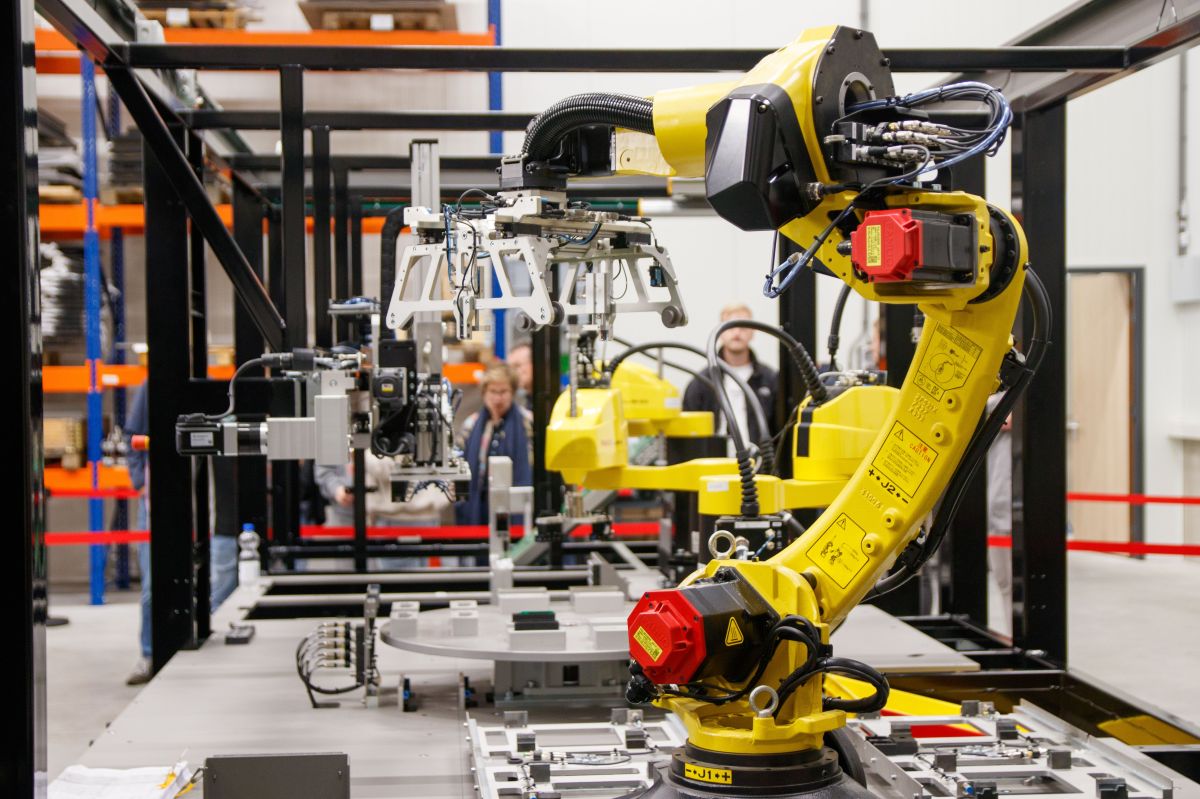
2. Teaching Robots to Handle the Chaos of the Warehouse with Pickommerce
Standard warehouse automation works smoothly when every product is identical, perfectly aligned, and predictable. Real-world distribution centres, however, are full of chaos. A single facility might store thousands of items with radically different weights, awkward packaging shapes, slick surface textures, and varying levels of fragility.
Moreover, because Australia relies on long transport routes, warehouse errors carry high costs. Catching a picking error in a Sydney depot is a quick fix. Catching that same error after a freight truck drives thousands of kilometres to a remote mine site is an expensive nightmare.
So, what if companies could use 3D vision and zero-shot algorithms to recognise unfamiliar items without needing every single product pre-catalogued or individually programmed? Well, this is where Pickommerce would come in.
Physical AI helps logistics providers sustain operations during acute labour shortages. It reduces physical strain on workers from repetitive heavy lifting. It also allows businesses to transition staff into higher-value supervision, quality assurance, and maintenance roles.
Companies in Australia could utilise these technologies to increase their productivity, accuracy and output similar to automating the famous Henry Ford assembly line. An enticing offer, for many businesses.
3. Doysight: Giving Machines an X-Ray Eye on Their Own Health
Catastrophic mechanical failures rarely happen out of nowhere. They usually start as tiny internal shifts; a hairline crack in a gear, a micro-leak in a seal, or a subtle vibration deep inside an engine casing. By the time traditional external sensors notice something is wrong, severe damage or costly operational downtime has already taken hold.
Odysight.ai fixes this by placing miniature visual-sensing cameras combined with specialized AI models inside critical machinery to continuously observe internal health. It essentially gives machines an internal eye to monitor their own wear and tear.
The technology is moving rapidly from the lab to real-world platforms. The company completed US test flights of an AI visual-sensing system on a Black Hawk helicopter. It has also:
- It secured a proof-of-concept purchase order from Honeywell Aerospace for auxiliary power units.
- It entered a cooperative research and development agreement with the US Navy for condition-based maintenance.
- It received a purchase order via Elbit Systems for deployment with the Israeli Ministry of Defence.
Unplanned equipment downtime on an offshore platform in the Bass Strait or a mine site in the Pilbara leads to massive transport costs and production delays. Visually monitoring internal components without repeatedly dismantling heavy machinery saves time and money. It also supports national priorities around maintenance, repair, and overhaul (MRO) for defence and industrial fleets.
4. Listening to the Engine’s Pulse at the Edge
Where Odysight.ai relies on vision, RSL Electronics approaches predictive maintenance through smart sensors, vibration analysis, and edge computing.
Its Health and Usage Monitoring Systems (HUMS) evaluate rotating assets such as engines, gearboxes, drivetrains, and pumps in real time. By analysing vibration and performance data directly on the machine rather than sending raw data back to a distant cloud server, edge processing delivers instant, actionable alerts before a component fails.
Picture a freight train hauling cargo across the Nullarbor Plain or an emergency rescue helicopter operating during bushfire season. An unexpected mechanical breakdown in those settings creates massive safety hazards and astronomical repair bills. Continuous equipment-health monitoring lets operators schedule maintenance around actual asset condition rather than sticking rigidly to calendar dates.
Conclusion: Smarter Tools for the Road Ahead
While these four technologies address different sectors, they share a central mission of driving a broader shift from reactive maintenance to guided, automated, and predictive operations.
ARJeannie gives people clear visual guidance. Pickommerce gives robots the flexibility to handle physical variation. Odysight.ai gives machines the visual capacity to inspect themselves while RSL Electronics gives operators edge-level insights into mechanical health.
As Australia advances its Future Made in Australia agenda and invests in sovereign industrial capabilities, adopting technology works best through local collaboration. By pairing Israeli technological innovation with the deep local knowledge of Australian manufacturers, engineering firms, defence primes, and logistics operators, these tools can be adapted, integrated, and supported directly within Australia’s unique operating environments.
When we look at the big picture, a few questions come to mind:
- Could augmented-reality work instructions help your business shorten onboarding times and bridge technical skill gaps?
- Would physical AI resolve manual picking and palletising bottlenecks in your distribution centres?
- How much unscheduled downtime could internal visual sensing or edge-based vibration monitoring prevent across your high-value assets?
In a country defined by scale and complex supply lines, placing the right intelligence at the exact point of action is fast becoming a vital competitive advantage.
Please reach out to our trade officer who manages advanced manufacturing at:
Discover more from
Subscribe to get the latest posts sent to your email.
